Studies of a prescription medicine
Tesamorelin treats one HIV-related belly fat problem.
Approval covers one use. Trials in HIV care watched organ fat, blood sugar, side effects, and IGF-1, a liver-made growth protein.
What tesamorelin changed in the first trials
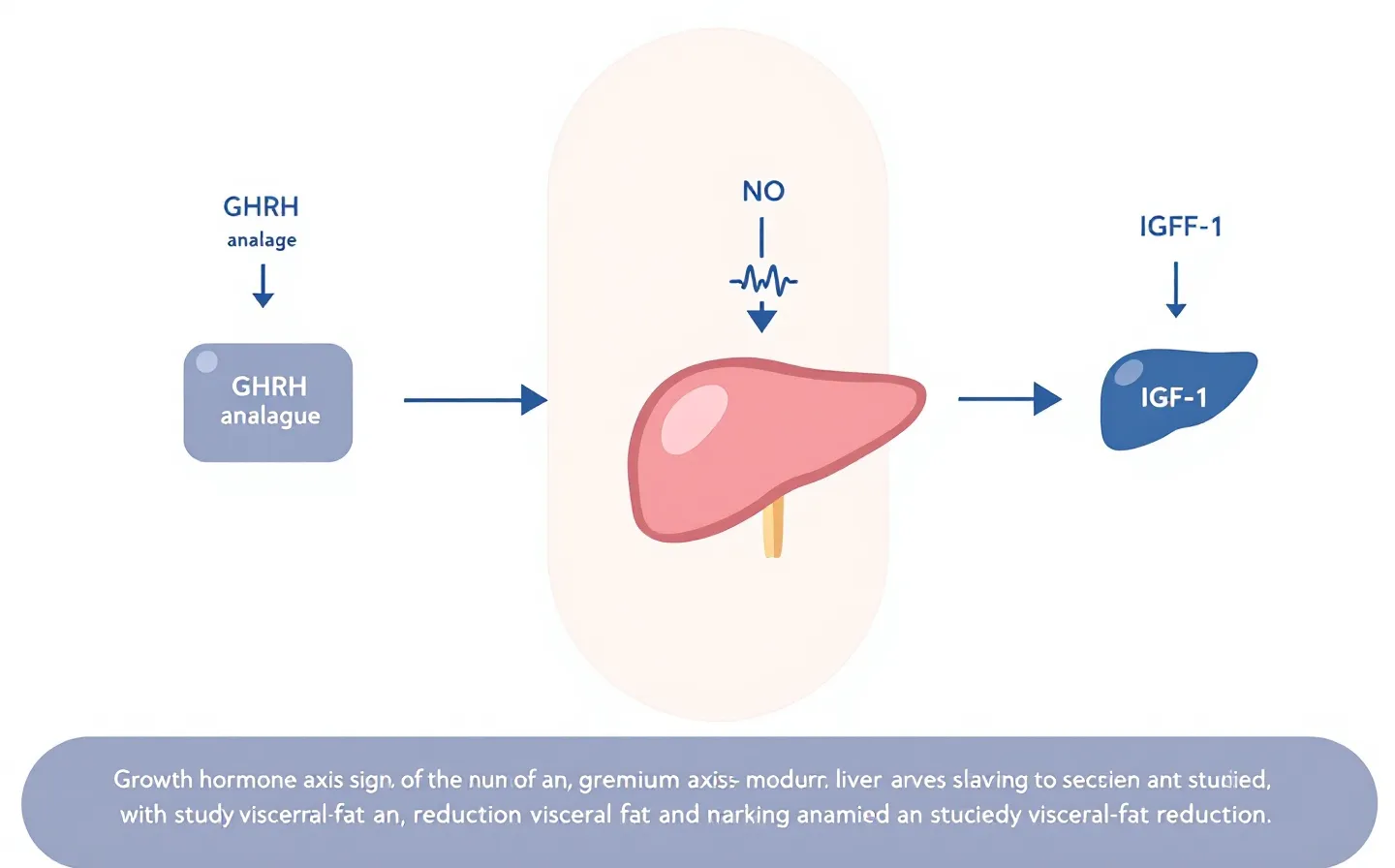
Canadian researchers first made tesamorelin for abnormal belly fat. They wanted to help patients with HIV. Older antiviral drugs had shifted fat away from their limbs. The same drugs added fat beside stomach organs. Tesamorelin prompts a growth gland. The gland sends out hormone, and the liver makes IGF-1. That protein helps the body use stored organ fat. In trials, daily shots of 2 mg cut that fat about 15% over six months [1].
Federal drug officials approved tesamorelin for this one problem in 2010 [5].
If you don't have this HIV-related fat shift, the trial result can't tell what will happen in your body. It also doesn't show that your scale weight will fall. A doctor must start with the approved use, your health history, and the drug warnings.
The trials didn't show general weight loss. Tesamorelin isn't a diet drug.
The shots reduced organ fat. They didn't reduce fat beneath your skin.
What tesamorelin changed in the larger trials
Scientists copied a natural brain message that starts growth hormone. The natural message breaks down in seconds. Enzymes are blood proteins that quickly take it apart. Chemists added a small cap to protect the medicine. Each shot could then start normal hormone waves.
Two large Phase 3 trials tested patients with HIV. This phase is the main patient test before approval. In one study, 412 patients took daily shots of 2 mg. After 26 weeks, the deep fat in their bellies had fallen. A harmful blood fat fell by 50 milligrams per deciliter. The blood level of IGF-1 also went up [1]. This is a liver-made growth protein. Patients who stayed on treatment kept an 18% fat drop for a year. Stopping treatment allowed the fat to come back [2]. A 2026 review checked five trials [3]. It reported a drop in fat near the organs, with no dangerous side effects.
The change was narrow. Organ fat fell; fat under the skin did not. Researchers combined the two Phase 3 trials. On flat scan images, doctors traced each deep-fat patch. More treated patients crossed the study cutoff of 140 square centimeters. The unit describes space on the scan, not body weight. The difference held with 95% certainty [13]. Blood tests tied to heart health improved too [11].
Daily treatment moved fat away from organs. It didn't reshape your whole body.
How tesamorelin gets your gland to release hormone
Tesamorelin is a peptide hormone. A peptide is a small string of protein building blocks. Tesamorelin has 44 of those parts, called amino acids. The shot contains no growth hormone. Instead, tesamorelin prompts your gland to send out its own hormone in waves [5].
For two weeks, researchers watched 13 healthy men. Each day, each man got tesamorelin 2 mg under the skin. IGF-1 rose by 181 micrograms per liter [4]. This liver-made growth protein showed that the gland had answered. Hormone came in waves, not one long surge.
Those results apply to the tested prescription drug. Online vials without pharmacy checks may not be sterile or pure. They aren't the same as the medicine made and checked for those trials.
What doctors may prescribe tesamorelin to treat
Tesamorelin's approved use covers one medical problem. Other uses are not approved. You can ask your doctor how that limit affects your care.
Only adults with HIV and this fat problem are covered. Doctors call the condition lipodystrophy; older antiviral drugs moved body fat [5]. No other use has official approval.
Researchers also looked at liver fat in 50 treated adults. On flat scan images, the marked belly-fat area shrank by 42 square centimeters [6]. Liver fat also moved down. Smaller studies checked memory, with mixed results. None led to wider approval. Cosmetic fat loss isn't approved. The main trial proof still comes from HIV care [1].
Large trials haven't shown general fat loss in healthy people. Tesamorelin raises growth hormone and IGF-1, a liver-made growth protein. Those changes can use deep fat. They don't prove benefit outside HIV treatment.
The approval covers one medical problem.
Why tesamorelin isn't a muscle-building steroid
Tesamorelin isn't a steroid. Muscle-building steroids copy male sex hormones. Tesamorelin contains no steroid hormone.
The medicine prompts your gland to send out natural hormone. IGF-1 then comes from your liver [4]. This growth protein is part of the response. No artificial male hormone enters the body. Sports officials still ban tesamorelin in athletic events. Their rules cover drugs that change natural growth hormone.
Tesamorelin starts your own gland response. It doesn't add a steroid.